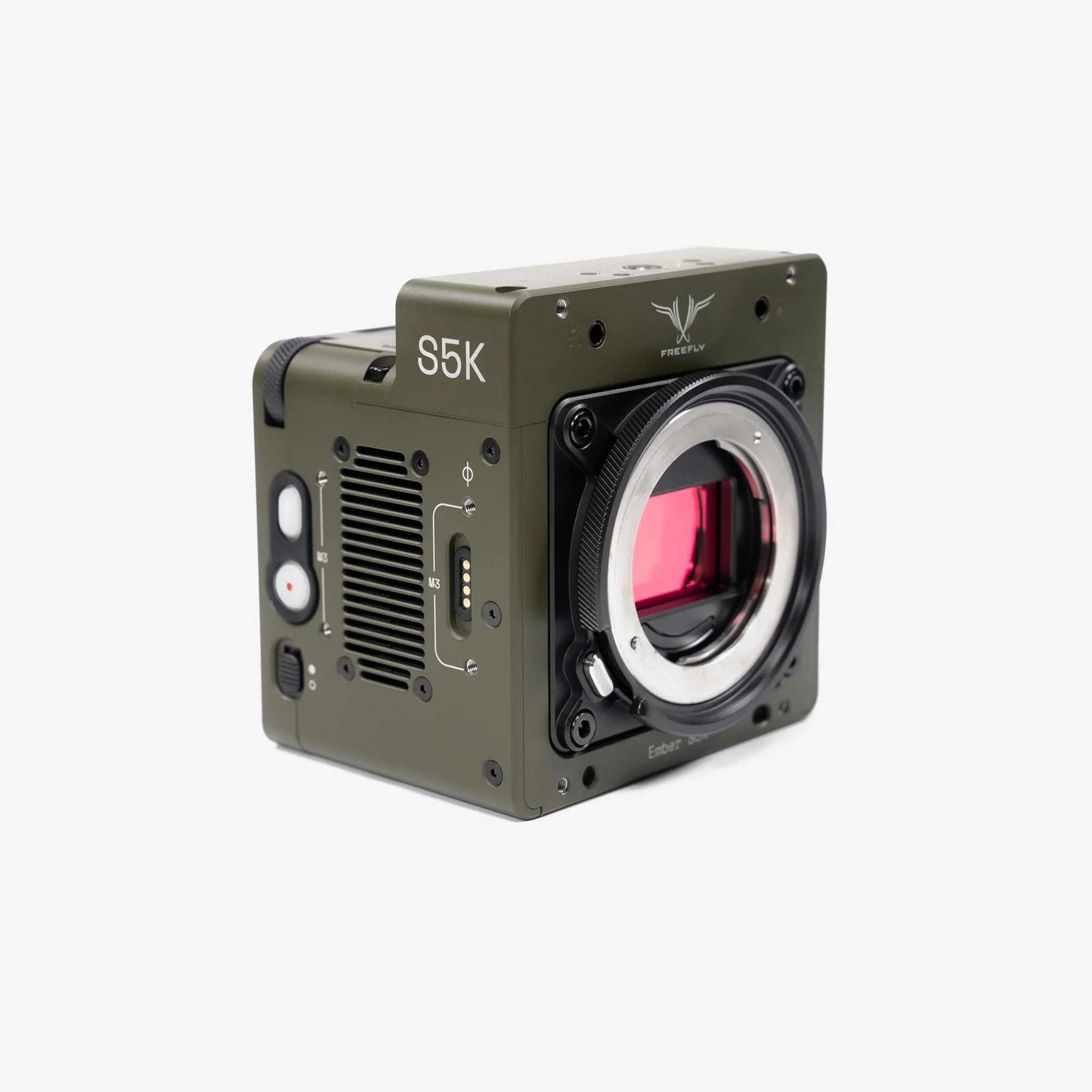
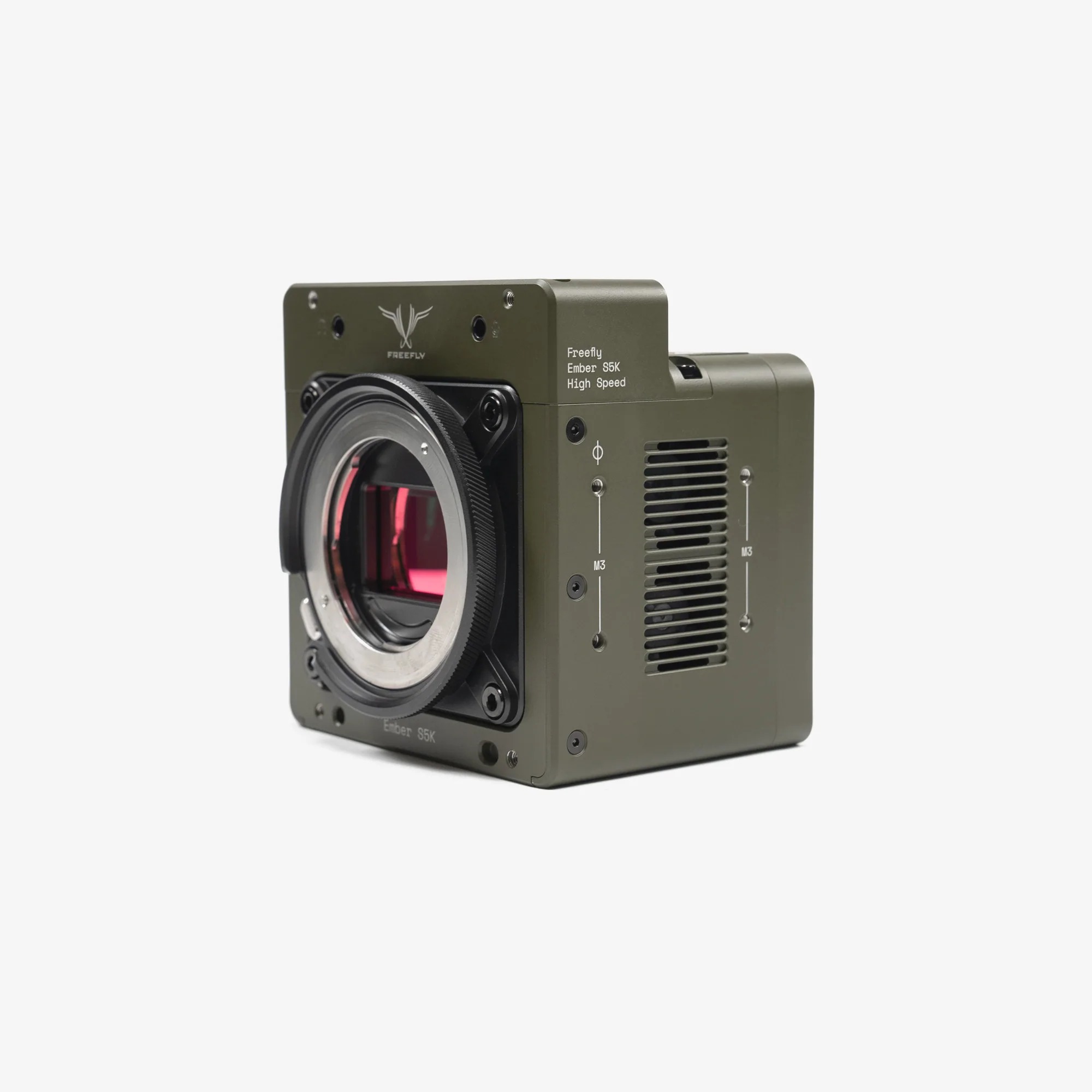
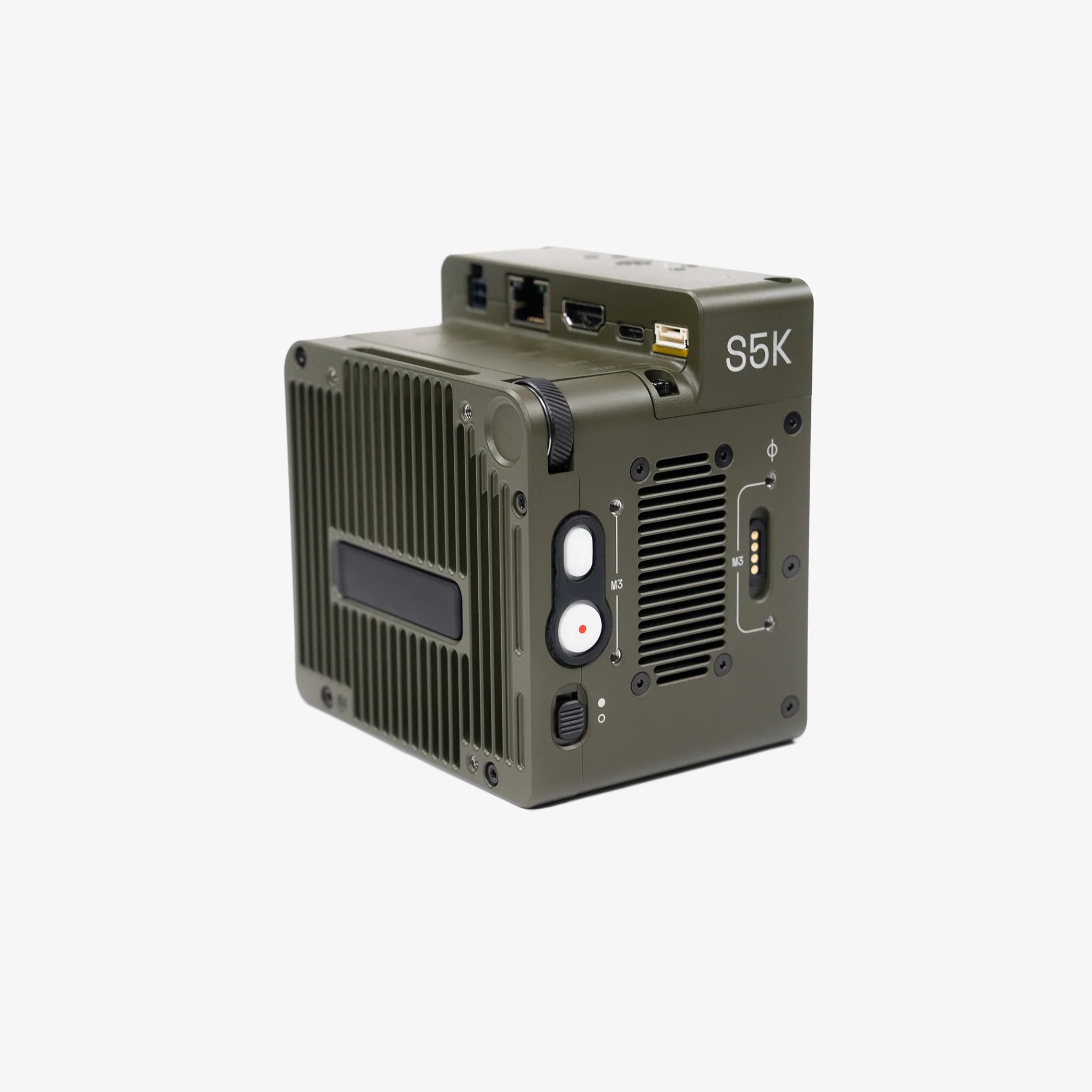
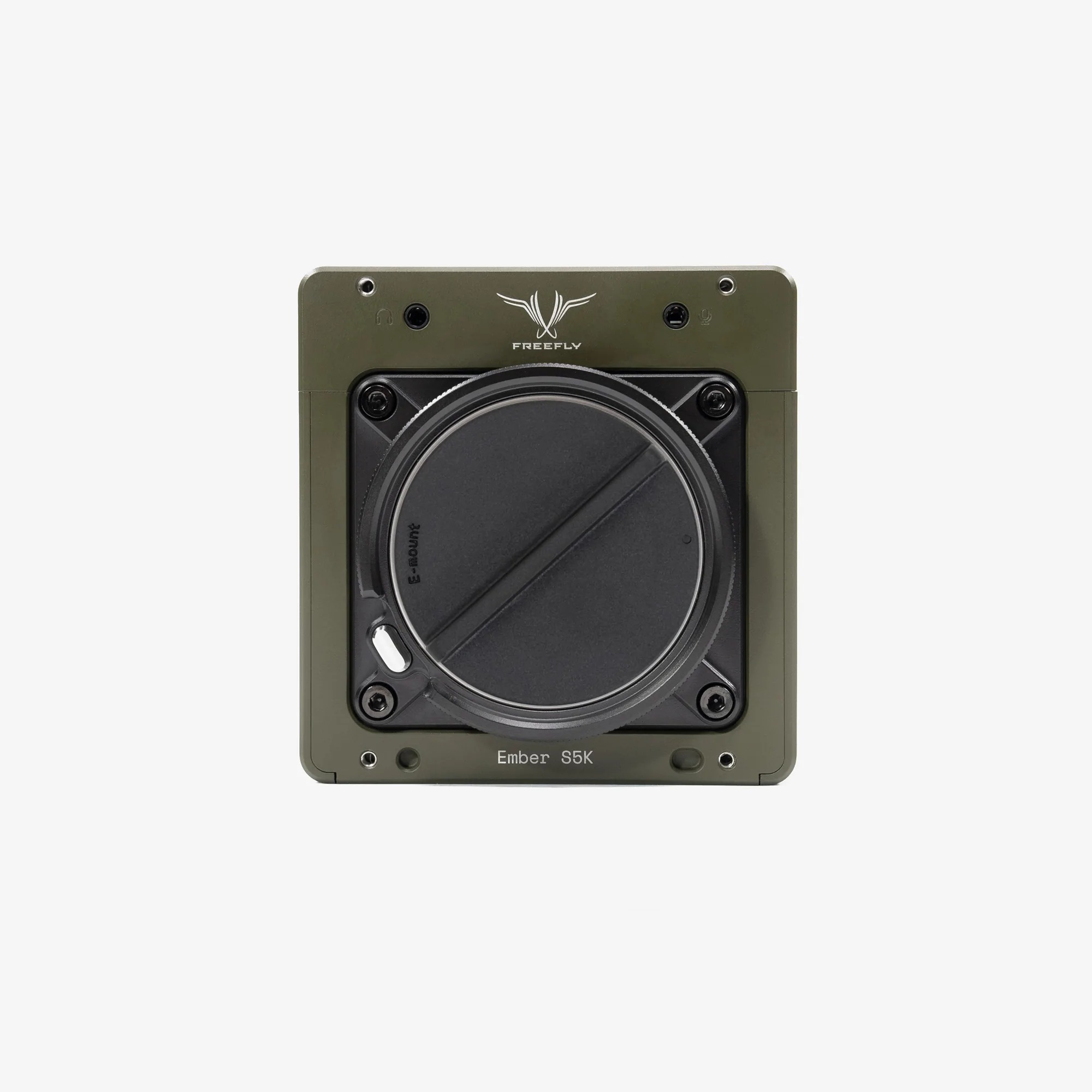
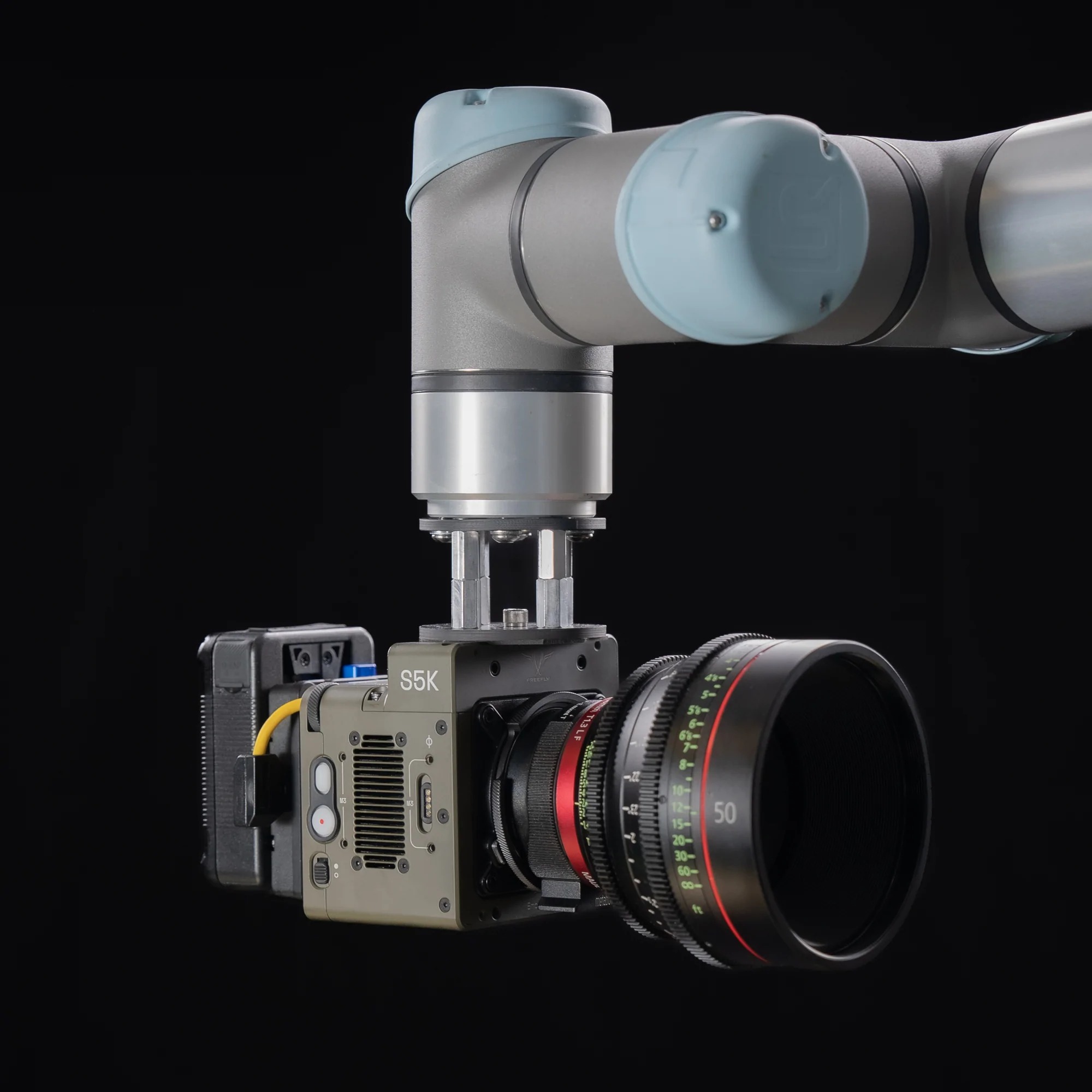
Freefly Ember S5K (4TB) High-Speed Commercial Imaging Camera

Key Features
- 5K max resolution at 600fps
- 4K 800fps
- Gpixel sensor
- Fast workflow
- ProRes Codec
- Global Shutter
Description
Freefly Ember S5K (4TB) High-Speed Commercial Imaging Camera
It is a compact, professional-grade imaging system engineered for demanding applications requiring sustained high-frame-rate capture. It integrates a high-performance Super 35 sensor with continuous recording architecture, enabling extended-duration acquisition without traditional buffer constraints typical of legacy high-speed systems.
Core Technical Specifications:
-
High-Speed Performance:
-
5K (5120 × 4096 or equivalent crops): Up to 600 fps (full sensor) / 616 fps in 16:9 / 809 fps in 2.37:1 cropped modes.
-
4K (4096 × 2160 DCI): Up to 800 fps (17:9) / higher in cropped configurations (e.g., exceeding 1000 fps at reduced resolutions).
-
Additional modes support cropped or binned operation for elevated frame rates.
-
-
Sensor:
- Global electronic shutter Super 35 (S35) format Gpixel sensor; native resolution 5120 × 4096; active area approximately 23.04 mm × 18.43 mm; pixel pitch 4.5 µm.
-
Dynamic Range & Sensitivity:
Approximately 11 stops of dynamic range (inherent compromise for extreme frame rates); native ISO range 100–400 (optimal around 300–400). -
Recording System:
Internal 4TB NVMe M.2 SSD (TLC configuration; user-upgradable); supports continuous recording limited solely by storage capacity (e.g., ~36–45 minutes at peak 5K/4K rates, depending on exact parameters); 10-bit Apple ProRes 422 LT codec for efficient, high-fidelity data handling and streamlined post-production integration. -
Form Factor & Integration:
Cube chassis (~100 mm × 104 mm × 100 mm); body weight ~800–830 g; multiple 1/4”-20 and M3 mounting points; active EF lens mount (electronic iris/focus control with compatible Canon EF optics); optional adapters for PL, Sony E, or third-party systems.
The Ember S5K excels in precision motion analysis and research environments where high temporal resolution, global shutter integrity, and extended capture duration are essential. Key use cases include:
• Vibration analysis and structural dynamics testing (e.g., resonance identification in mechanical systems, enhanced via integrated Amplify processing for subtle motion amplification.
• Fluid dynamics and schlieren imaging (visualization of density variations in gases/liquids).
• Product/material deformation and failure studies.
• Automotive/aerospace component evaluation (e.g., impact, crash, or propulsion phenomena).
• Biomechanics and sports science research (precise kinematic tracking).
• Digital image correlation (DIC) for strain/displacement measurement.
• General R&D in academia, engineering, and defense sectors requiring repeatable, high-fidelity slow-motion data without workflow bottlenecks.