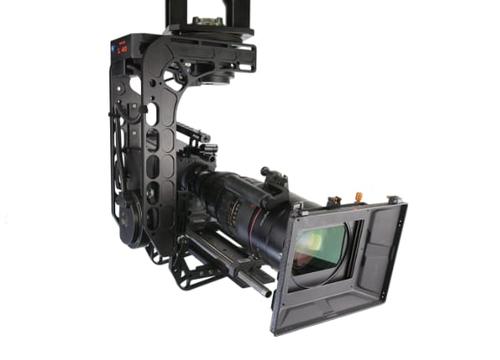
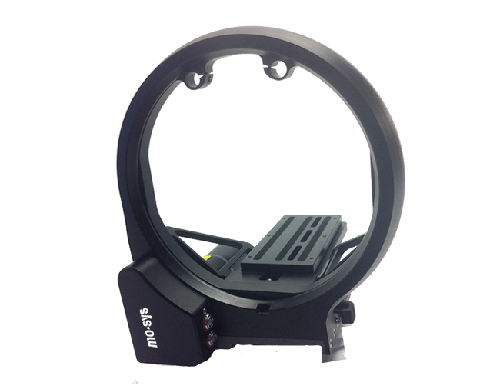
Mo-Sys L40

Key Features
- Supports cinema camera payloads up to 40kg.
- Lightweight 18kg construction for demanding camera setups.
- Powerful 100Nm motors deliver precise camera movement.
- Zero-backlash gearing ensures immediate response to commands.
- Pan and tilt speeds reach 180°/second.
- Optional back-pan maintains orientation during crane movements.
- Optional 360° roll axis enables three-axis operation.
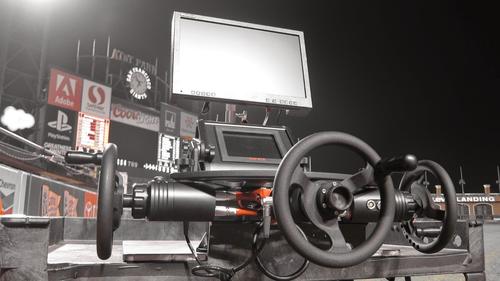
- Flexible handwheel, pan-bar and joystick control options.
- Built-in encoders support virtual production tracking workflows.
- Open frame design simplifies camera rig access.
Description
Mo-Sys L40 – Precision Remote Camera Control for Ambitious Cinematography
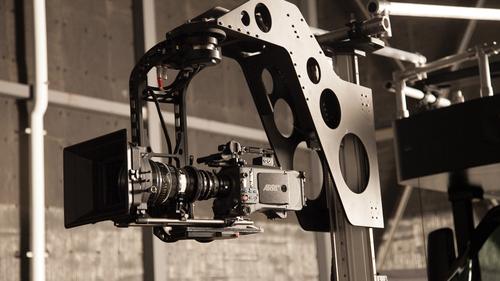
Turn creative camera movements into compelling cinematic images with the Mo-Sys L40 remote head. Designed for high-end digital cinematography, this professional pan-and-tilt head combines substantial payload capacity with responsive control. Weighing 18 kg, it supports camera and lens packages up to 40 kg, making it suitable for substantial cinema setups such as an ARRI Alexa equipped with a large zoom lens. For productions working with demanding camera configurations, the L40 offers the strength and flexibility to support their visual ambitions.
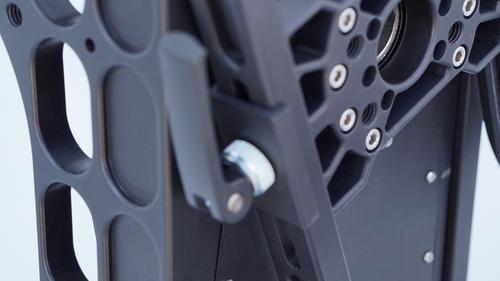
At its core, the L40 delivers precise control through 100 Nm motors and zero-backlash gearing. Developed by Mo-Sys to provide powerful performance in a compact assembly, the drive system responds directly to operator commands, including rapid changes in direction. Its rigid construction and precision bearings support demanding camera movements on cranes and motion-control equipment. This combination helps camera operators execute intentional, accurate movements while handling the inertia of substantial cinema camera packages.
With pan-and-tilt speeds up to 180° per second, the L40 provides the movement capability required for fast reframing. Its specified pan-and-tilt range is ±720°, limited by cable twist. Control options include handwheels, a pan-bar and a joystick, allowing operators to select their preferred interface. Remote operating distances reach 100 metres through the system bus, 300 metres with the optional radio, and 20 kilometres using an optical fibre bridge.
Practical camera access is another important part of the L40’s design. Its open, single-sided frame makes loading and unloading camera rigs easier, while providing access to the mounted equipment. Camera packages can be transferred without the extensive removal and reassembly of peripherals. The motors’ high torque also makes the head less sensitive to imbalance during lens changes and configuration adjustments. Together, these features help reduce the time spent preparing equipment between shots.
The L40 is designed for setup and operation by a camera operator or focus puller, reducing dependence on a dedicated remote-head technician. Mo-Sys components connect through a single daisy-chain cable carrying power and communications. Openings through the motors accommodate standard camera cables without slip rings, helping simplify cable routing and reduce tangles. These practical details support an efficient working environment when camera positions, lenses and shot requirements change throughout the day.
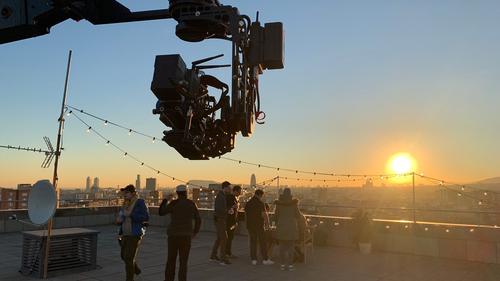
For crane and jib applications, the optional back-pan function automatically maintains the camera’s orientation toward the same plane of action as the crane swings through an arc. This helps simplify coordination between camera and crane movement, allowing each operator to concentrate on their part of the shot.
Creative flexibility extends beyond the standard two-axis configuration. An optional roll module upgrades the L40 to three-axis operation and can be added on set. Pan and tilt establish the camera’s direction, while the additional roll axis introduces rotation around its viewing axis. This gives cinematographers another way to shape the image and develop expressive camera movements, with the flexibility to choose the configuration that suits the production.
The L40 also connects physical camera movement with digital production workflows. As an encoded remote head, it supplies movement data