Mo-Sys StarTracker PTZ

Key Features
- Six-axis camera tracking for immersive virtual production
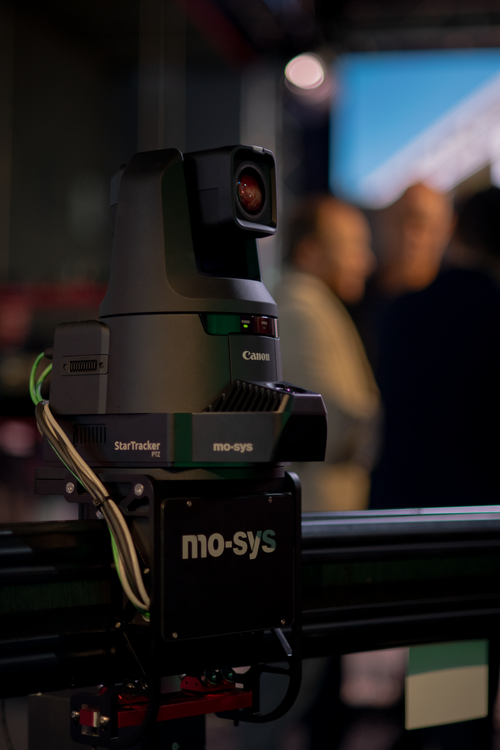
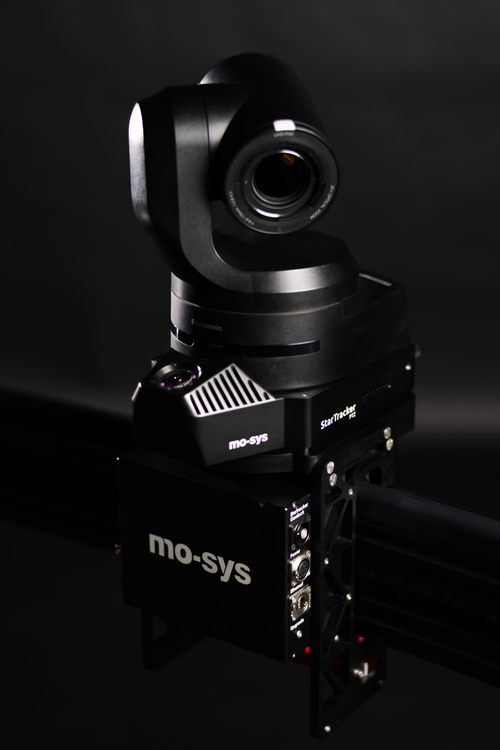
- Compatible with selected Canon, Panasonic, Sony cameras
- Absolute tracking eliminates homing routines at startup
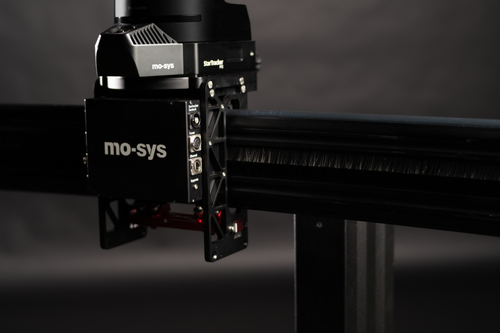
- Flexible mounting on tripods, jibs, dollies, rails
- Wraparound design preserves camera movement and zoom
- Browser-based configuration with guided mapping and alignment
- Supports Mo-Sys F4, FreeD and OpenTrackIO outputs
Description
Mo-Sys StarTracker PTZ – Camera Tracking for Immersive Virtual Production
Move your camera. Reveal the depth of your virtual studio.
Bring greater dimension and creative freedom to your productions with Mo-Sys StarTracker PTZ, a tracking add-on for compatible 4K PTZ cameras. By adding X, Y, Z positional tracking and roll to the camera’s existing pan-and-tilt information, it enables six-axis camera movement tracking for virtual studio production.
StarTracker PTZ combines its tracking measurements with camera-supplied movement and lens data, helping virtual studio software reproduce the physical camera’s viewpoint. This opens up more expressive shot possibilities, from lateral camera moves to sweeping changes in height and perspective.
Create Virtual Sets with Visible Depth
A camera that pans and tilts from one position offers a different visual experience from a camera that travels through the studio. Moving the camera introduces parallax: nearby objects appear to move differently from distant objects, giving viewers a stronger sense of depth.
StarTracker PTZ brings this dimensional quality to compatible PTZ workflows. With positional tracking, a moving camera can reveal the relationship between foreground details, presenters and virtual backgrounds, creating a more convincing sense of space. Its absolute tracking also removes the requirement for a homing routine at power-up.
Flexible Mounting for Dynamic Camera Work
The purpose-shaped housing fits around the PTZ camera while preserving its movement and zoom operation. Mounting options include tripods, jibs, dollies and rails, allowing the tracking system to support different studio layouts and production styles.
For manually operated setups, one operator can move the camera support while another manages the remote PTZ controls. With suitable motorised supports, camera travel and PTZ operation can form part of a remotely operated setup. This flexibility makes StarTracker PTZ a practical choice for studios exploring more varied camera positions and moving shots.
Browser-Based Configuration
Configure units through a web interface, with guided mapping and alignment tools. Local network access supports setup without an internet connection. An optional jib console provides pan, tilt, zoom and focus operation using Jimmy Jib input devices.
Camera Tracking That Connects Physical and Virtual Worlds
In a virtual production workflow, tracking provides the connection between the physical camera and the rendered scene. As the camera moves, the graphics system uses this information to update the virtual viewpoint, helping backgrounds and digital objects maintain their intended relationship with the live image.
This principle applies to both green-screen compositing and LED-wall production. For green-screen workflows, tracking informs how the digital background moves and scales. For LED environments, it enables the render engine to adjust the displayed perspective in response to the camera’s position. StarTracker PTZ brings compatible PTZ cameras into this broader camera-tracking workflow.
Technical Specifications
| Specification | Details |
|---|---|
| Supported Canon cameras | CR-N500, CR-N700 |
| Supported Panasonic camera | AW-UE150 |
| Supported Sony cameras | X1000, FR7, BRC-AM7 |
| Tracking output | Mo-Sys F4, FreeD, OpenTrackIO over IP |
| Camera data input | FreeD over IP |
| Sensor | 850 nm infrared |
| Power | 12 V DC, 3 A; 4-pin XLR |
| Network | RJ45 Ethernet for tracking output and PTZ control |
| Listed dimensions | 9 × 18 × 29 cm |
| Jib control box dimensions | 7 × 15 × 24 cm |
Tracking operates within a star-mapped studio area using optical markers.