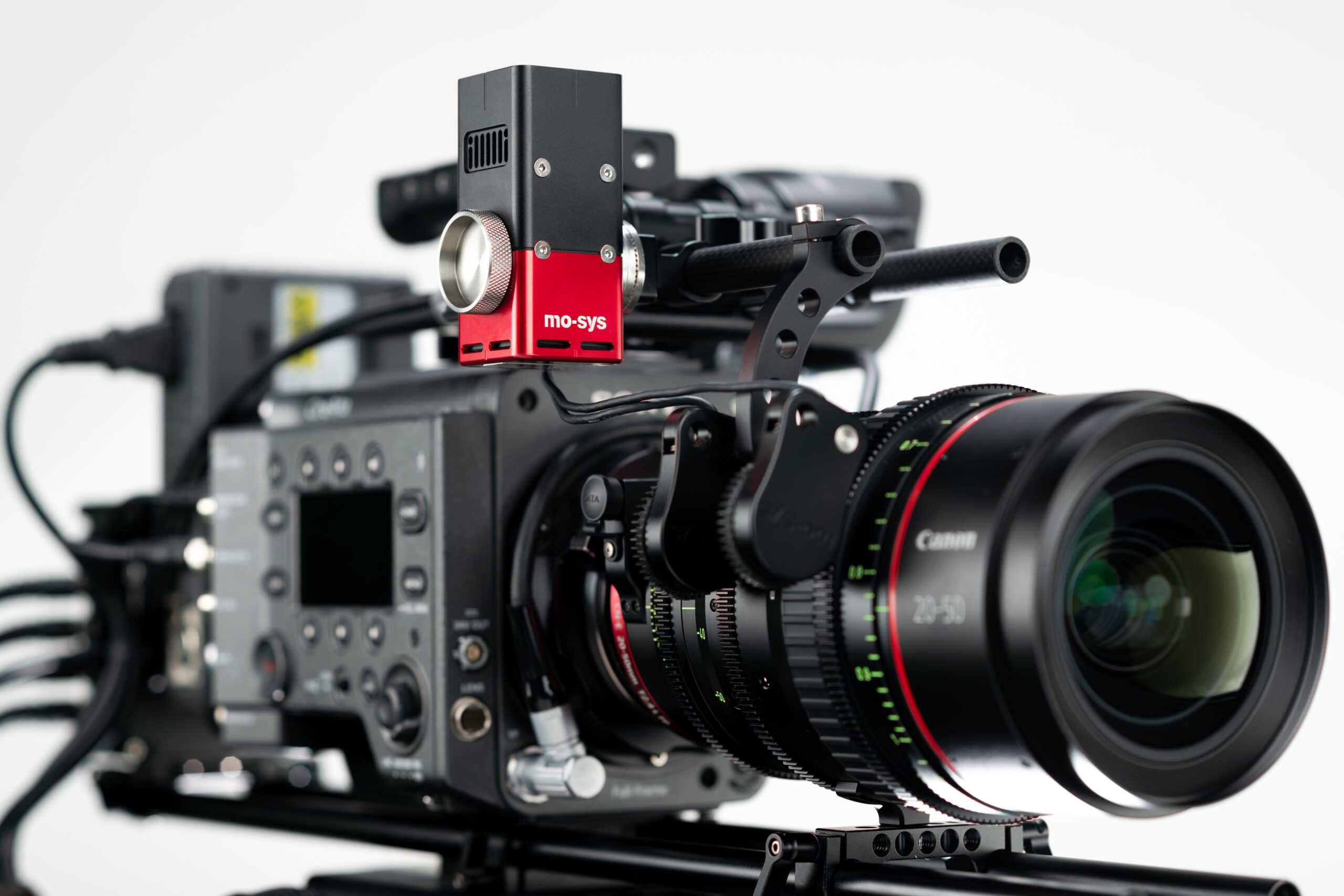
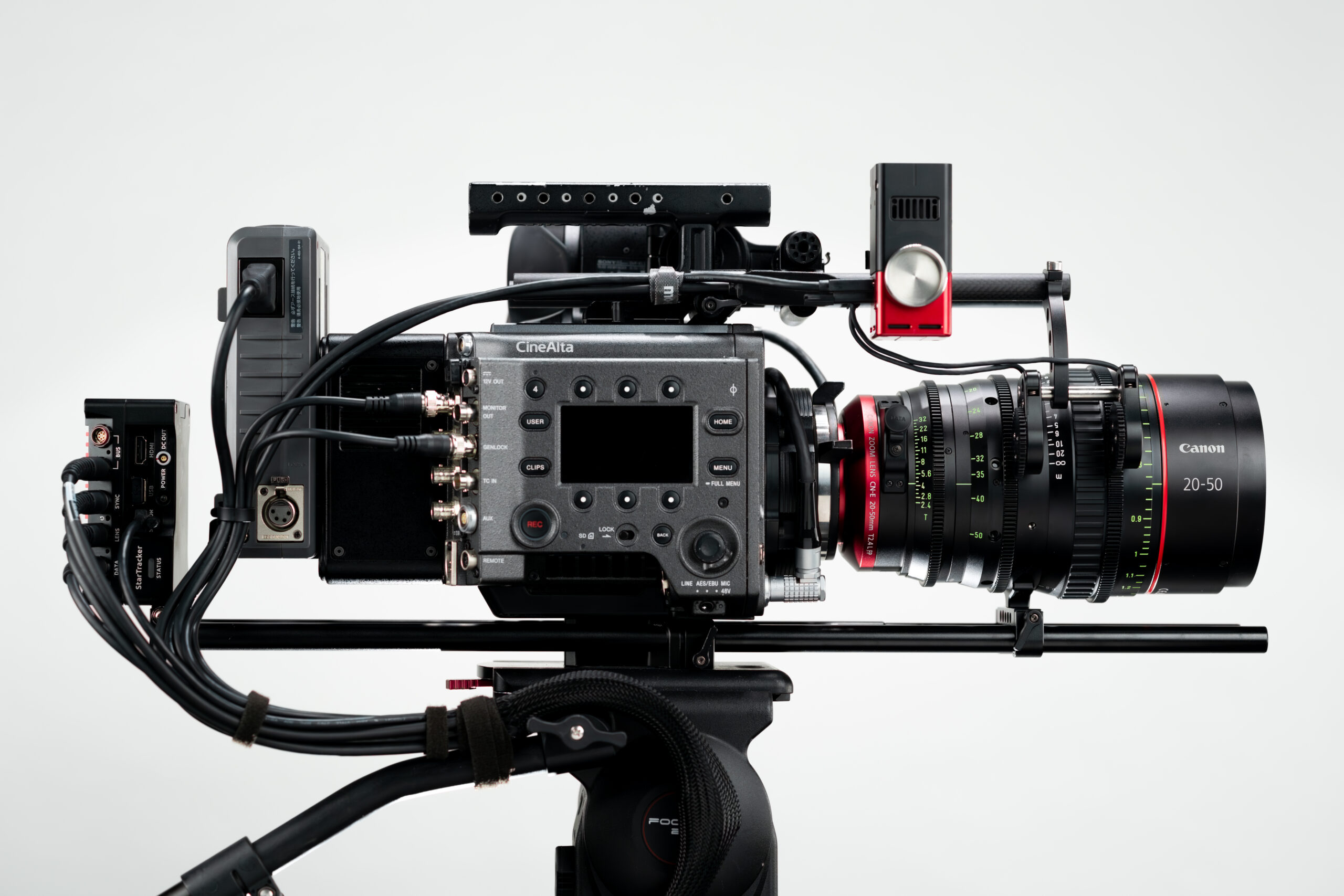
Mo-Sys StarTracker Max

Key Features
- High-resolution absolute optical camera tracking
- Accurate real-time 6DoF position and rotation tracking
- Lens zoom and focus tracking support
- Wide 130° tracking sensor field of view
- Zero drift accumulation for consistent tracking
- Inside-out tracking architecture reduces occlusion issues
- Retro-reflective ceiling, wall or floor tracking markers
- Support for digital LED wall tracking markers
- Auto alignment for faster studio calibration
- Rapid star map discovery
- Set-and-forget autonomous operation
- Browser-based system configuration and control
- Supports multiple StarTracker systems
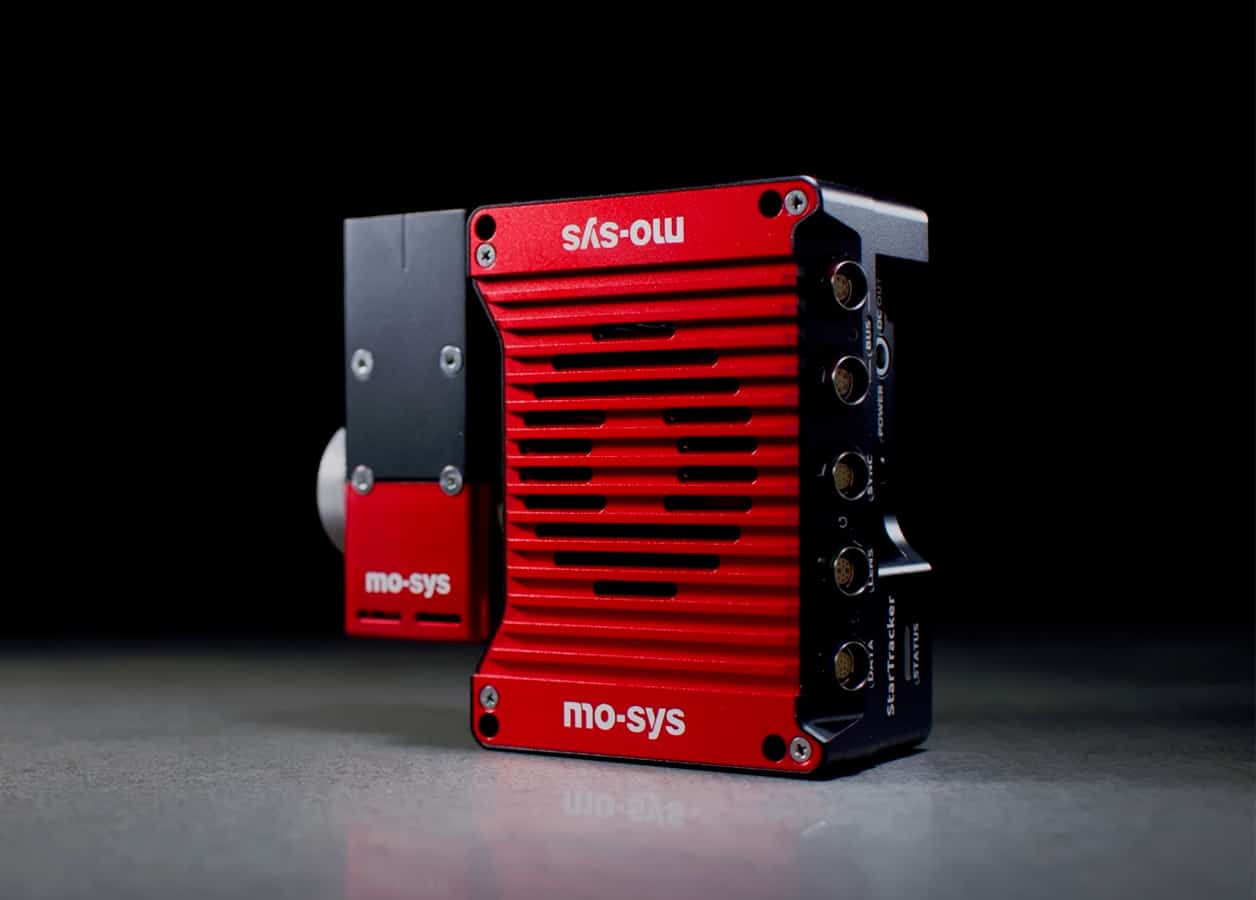
- Compact 250 g tracking sensor
- Compact 450 g processor unit
- Studio coverage up to approximately 100 × 100 m
- Supports ceiling heights above 16 m
- Mo-Sys F4 tracking data output
- FreeD tracking protocol support
- OpenTrackIO data output over IP
- 12–24V D-Tap power
- Approximately 20 W typical power consumption
- Compatible with wireless tracking configurations
- Suitable for cameras, pedestals, jibs and cranes
- Ideal for stabilized and handheld cameras
- Supports broadcast robotics workflows
- Compatible with LED virtual production stages
- Suitable for green screen virtual studios
- Designed for AR and XR graphics
- Suitable for Unreal Engine virtual production workflows
Description
Mo-Sys StarTracker Max – Next-Generation Camera Tracking for Virtual Production
The Mo-Sys StarTracker Max is a next-generation professional optical camera tracking system engineered for high-end virtual production, broadcast studios, LED volumes, augmented reality, mixed reality and cinematic VFX workflows. Building on the proven StarTracker platform, StarTracker Max combines high-resolution optical tracking, redesigned miniaturized hardware and advanced tracking algorithms to deliver Mo-Sys’ most accurate tracking performance to date.
Designed for demanding production environments where precise synchronization between the physical camera and virtual world is essential, StarTracker Max provides reliable, real-time 6-axis camera position and rotation tracking, together with lens zoom and focus information. This allows virtual graphics, augmented reality elements and photorealistic 3D environments to remain accurately aligned with live-action camera movement.
Whether installed in a broadcast studio, green screen facility, LED virtual production stage, XR studio or large cinematic production environment, StarTracker Max gives production teams a scalable and dependable tracking platform capable of supporting everything from conventional studio cameras and pedestals to handheld systems, Steadicam-style setups, jibs, cranes and broadcast robotics.
Precision Absolute Camera Tracking with Zero Drift
At the heart of StarTracker Max is Mo-Sys’ proven inside-out optical tracking technology.
Instead of relying on external tracking cameras positioned around the studio, StarTracker Max observes specially positioned retro-reflective tracking markers — known as “stars” — installed on the ceiling, walls or floor. Digital markers displayed on LED walls can also be used in suitable virtual production environments.
From these reference points, the system continuously calculates the camera’s absolute position and orientation within the studio.
Because StarTracker Max performs absolute tracking, it does not rely only on continuously accumulated movement data. This helps eliminate the progressive positional drift that can affect some other tracking technologies during long takes or complex camera movements.
The result is stable and consistent alignment between the physical camera and the virtual environment, helping maintain the realism required for in-camera VFX, augmented reality graphics, virtual studios and real-time rendering.
True 6-Axis Tracking for Virtual Production
StarTracker Max provides accurate 6 Degrees of Freedom (6DoF) tracking, calculating the camera’s movement and orientation across:
- X-axis position
- Y-axis position
- Z-axis position
- Pan
- Tilt
- Roll
Lens zoom and focus information can also be incorporated into the tracking data.
This detailed camera and lens information allows real-time rendering systems to reproduce the movement of the physical camera inside a virtual 3D environment.
As the camera pans, tilts, rolls, cranes, tracks or changes focal length, the virtual camera responds accordingly. This enables realistic perspective changes and accurate integration between real-world foreground elements and computer-generated environments.
The system is therefore particularly suited to applications such as LED wall virtual production, Unreal Engine camera tracking, broadcast AR graphics, green screen virtual studios, XR stages and cinematic VFX production.
Wide 130° Field of View
The StarTracker Max sensor features an impressive 130-degree field of view, providing the system with a broad view of available tracking markers.
The wide viewing angle improves tracking flexibility during demanding camera movements and allows StarTracker Max to maintain tracking across a wide range of camera orientations.
It can even continue tracking when the camera is positioned pointing almost directly downward, making it highly suitable for dynamic studio and cinematic camera movements.
This capability becomes especially valuable when StarTracker Max is installed on equipment such as:
- Camera pedestals
- Jibs
- Camera cranes
- Handheld camera systems
- Stabilized camera systems
- Cable cameras
- Broadcast robotics
- Remote camera systems
The combination of wide-angle marker visibility and absolute optical tracking gives operators significantly greater creative freedom when designing camera moves for virtual production.
Designed for LED Wall Virtual Production
StarTracker Max is designed to integrate naturally into modern LED wall and LED volume virtual production stages.
Tracking references can be installed conventionally on ceilings, walls or floors using retro-reflective markers. StarTracker Max can also work with digital LED wall tracking markers, providing additional flexibility when integrating tracking into an LED-based studio.
The system continuously sends real-time camera position, rotation and lens information into the virtual production pipeline.
This tracking data can then be used by real-time rendering platforms such as Unreal Engine to adjust the rendered virtual environment according to the camera’s actual movement.
This synchronization is fundamental to creating convincing in-camera visual effects (ICVFX) because perspective, parallax and virtual environment positioning need to change accurately as the physical camera moves.
Ideal for Green Screen and Virtual Studios
StarTracker Max is equally suitable for traditional green screen virtual production environments.
Production studios can use the same tracking infrastructure for broadcast graphics, virtual sets, augmented reality elements and green screen compositing.
Because tracking stars can be positioned on the ceiling, walls or floor, the installation can be adapted to different studio layouts without significantly restricting camera movement.
This makes StarTracker Max especially valuable for studios that operate mixed workflows involving:
- Green screen production
- LED volume production
- Augmented reality graphics
- Physical studio sets
- Virtual sets
- Broadcast graphics
- Extended reality environments
A single StarTracker-based tracking workflow can therefore support multiple production formats within the same facility.
High-Resolution Tracking Technology
StarTracker Max represents the latest generation of Mo-Sys’ StarTracker camera tracking platform.
The system uses improved tracking algorithms together with redesigned and miniaturized tracking hardware to deliver highly precise positional information.
Mo-Sys developed StarTracker around marker-based optical tracking technology designed specifically for professional broadcast and cinematic applications.
StarTracker Max advances this approach with improved hardware performance, higher-resolution tracking and a lightweight sensor architecture designed for modern virtual production workflows.
The result is a tracking system capable of supporting demanding productions where small tracking errors can become immediately visible in rendered virtual graphics.
Auto Alignment for Faster Studio Calibration
One of the most important workflow advantages of StarTracker Max is its auto alignment technology.
Auto alignment simplifies the process of connecting the physical tracking environment to the studio’s virtual coordinate system.
Guided calibration procedures help operators correctly align StarTracker with the virtual set, reducing manual setup requirements and minimizing potential alignment errors.
Once the system has been configured and calibrated, StarTracker Max can operate autonomously without requiring routine daily recalibration.
This creates what Mo-Sys describes as a set-and-forget professional tracking workflow.
For busy broadcast and virtual production environments, this can significantly reduce setup time between shooting sessions and allow production teams to focus more attention on creative work rather than repeatedly configuring the camera tracking system.
Rapid Star Map Discovery
StarTracker Max uses a mapped network of tracking stars to determine the camera’s absolute position within the studio.
Its rapid star map discovery technology allows the system to quickly recognize the surrounding marker environment.
Once the marker map has been created, StarTracker Max can identify its location within the studio and continuously update camera position and orientation as the camera moves.
Star maps can also be managed through the system’s browser-based interface, simplifying operation in facilities using multiple cameras or multiple StarTracker systems.
Web Browser-Based Control Interface
StarTracker Max includes a modern browser-based user interface designed to simplify configuration and system management.
Operators can access standard setup functions from common web browsers including:
- Google Chrome
- Mozilla Firefox
- Safari
- Microsoft Edge
- Opera
The StarTracker Max interface can be accessed directly through the tracking network by connecting to the unit’s IP address.
Internet access is not required for normal browser-based configuration.
When a compatible USB Wi-Fi adapter is used, operators can also access the interface through a local hotspot.
This allows technicians and operators to manage StarTracker Max from devices such as:
- Desktop computers
- Laptops
- Tablets
- Mobile devices
The browser interface includes guided wizard processes for important operations such as star map creation and automatic alignment.
Multiple StarTracker systems within a studio can also be configured and controlled from a single device, simplifying operation in larger multi-camera virtual production facilities.
Compact and Lightweight Camera-Mounted Design
A major improvement introduced with StarTracker Max is its compact physical design.
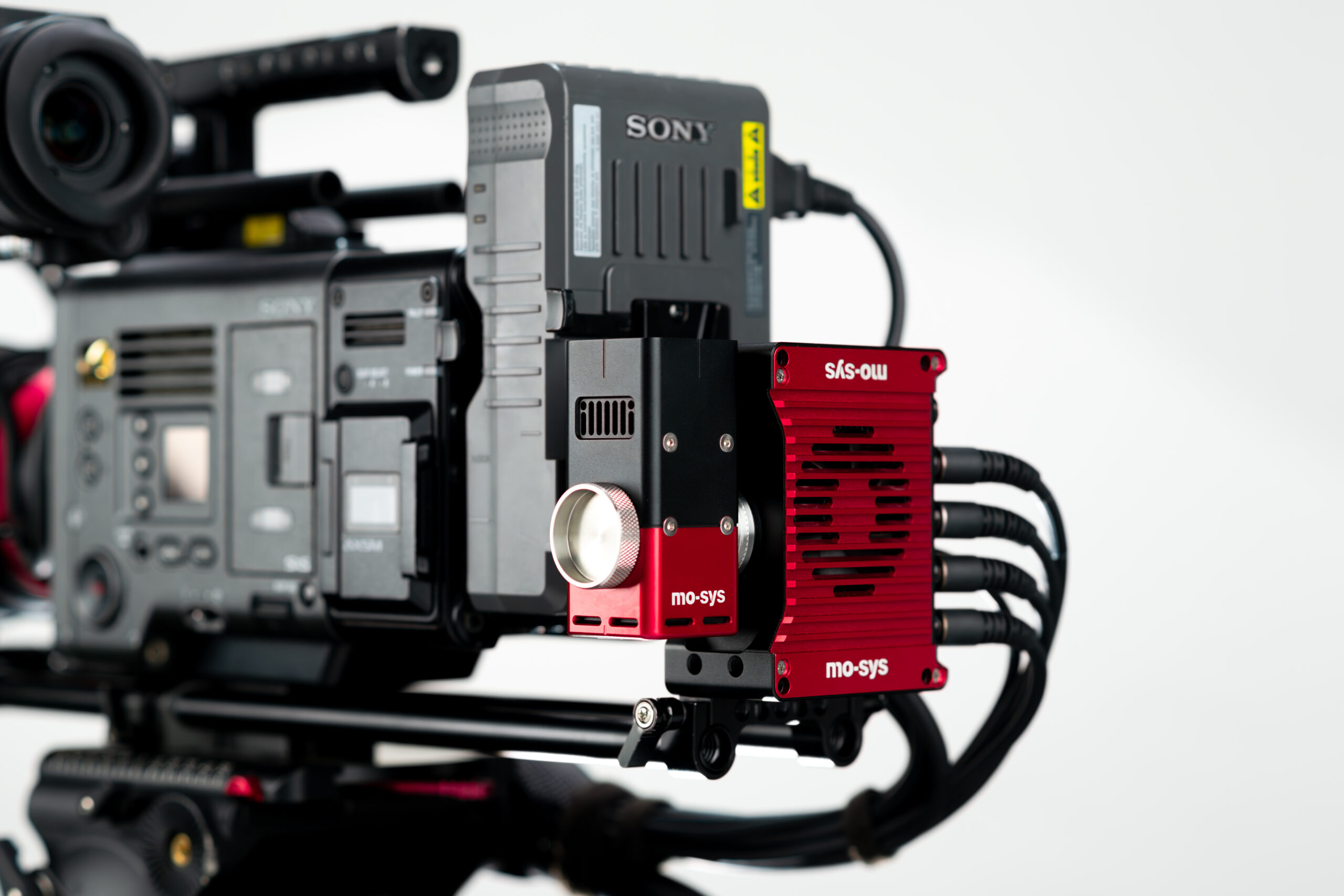
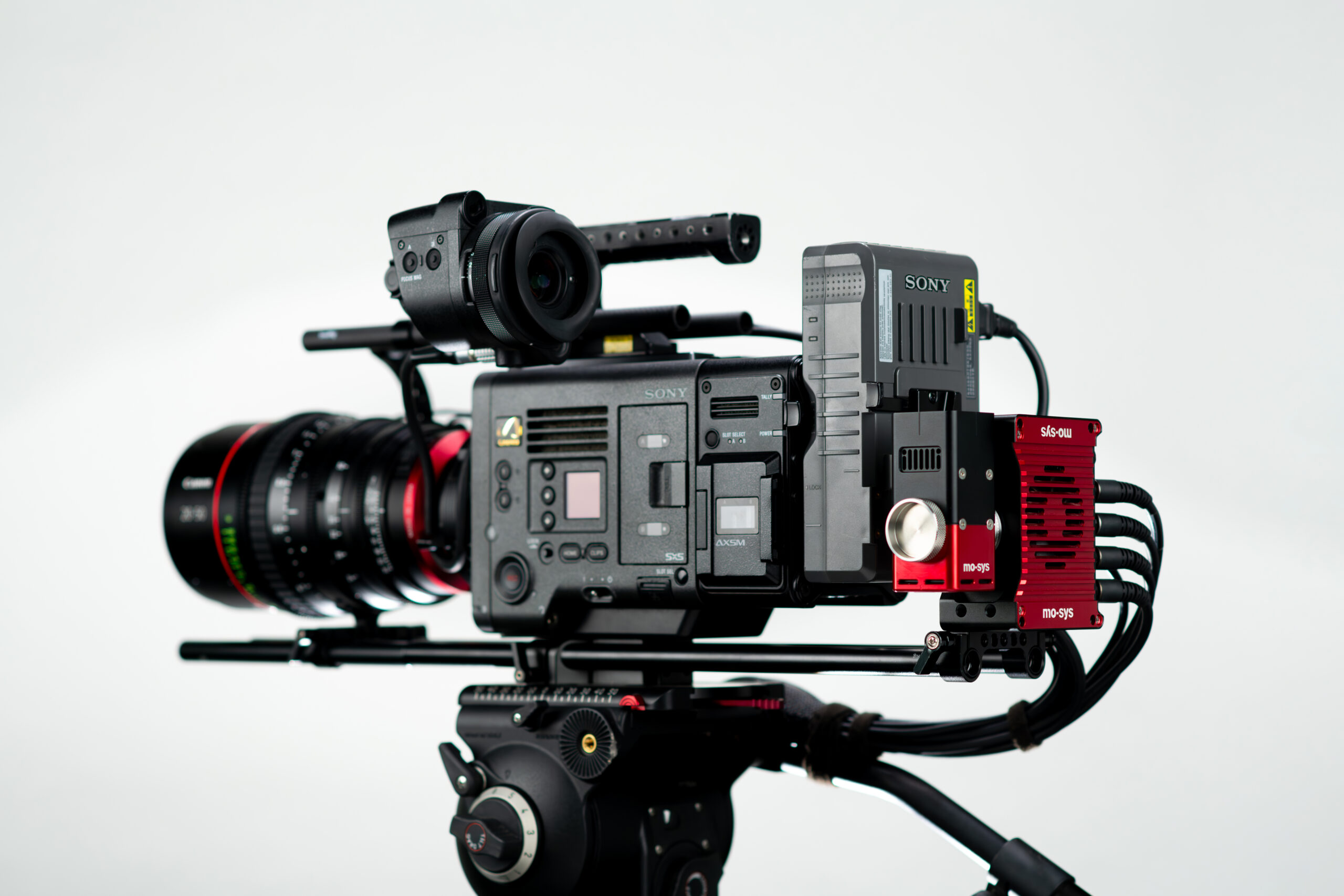
The tracking system is separated into a lightweight sensor unit and compact processing unit.
Sensor Unit
Dimensions: approximately 4 × 4 × 9 cm
Weight: approximately 250 g
Processor Unit
Dimensions: approximately 11 × 8 × 5 cm
Weight: approximately 450 g
The lightweight sensor reduces unnecessary weight and clutter around the camera.
This becomes particularly useful when StarTracker Max is installed on mobile camera platforms or stabilized systems where weight distribution and operator fatigue are important considerations.
Its compact architecture makes StarTracker Max suitable for everything from conventional broadcast studio cameras to more dynamic handheld and stabilized camera configurations.
Large Studio Tracking Capability
StarTracker Max is designed for both compact production spaces and large virtual production facilities.
The system is optimized for studio spaces of up to approximately:
100 × 100 metres
Mo-Sys specifies no explicit upper tracking limit when appropriate marker size and spacing are used.
The system can also operate in facilities with ceiling heights exceeding:
16 metres
when tracking markers are appropriately sized and positioned.
This scalability makes StarTracker Max suitable for:
- Television broadcast studios
- Film production stages
- Large LED volume studios
- XR production facilities
- Sports broadcasting environments
- Entertainment studios
- Virtual production sound stages
- Corporate virtual studios
The same basic tracking technology can therefore be deployed across studio spaces ranging from smaller production environments to extremely large stages.
Inside-Out Tracking Reduces Occlusion Problems
StarTracker Max uses an inside-out tracking architecture.
Because the tracking sensor is mounted directly on the camera and looks outward toward environmental tracking markers, the system does not depend on multiple external tracking cameras maintaining an uninterrupted view of the tracked camera.
This architecture helps reduce the occlusion and blind-spot problems that can sometimes affect conventional outside-in tracking systems.
In crowded studios containing crew members, lighting equipment, camera cranes, scenic elements and broadcast equipment, this can provide an important operational advantage.
As long as the StarTracker sensor maintains visibility of sufficient tracking references, it can continue calculating the camera’s absolute position.
Real-Time Tracking Data Over IP
StarTracker Max supports professional tracking data output over IP using industry-standard and Mo-Sys protocols.
Supported tracking formats include:
Mo-Sys F4
FreeD
OpenTrackIO
These protocols allow StarTracker Max to integrate with a wide range of virtual production, broadcast graphics and camera tracking workflows.
Tracking information can be distributed to compatible real-time graphics systems, rendering engines and studio infrastructure through the production network.
This flexible IP-based architecture simplifies integration into both new virtual production facilities and existing broadcast environments.
Low-Latency Tracking for Real-Time Graphics
Virtual production and augmented reality require tracking data to reach the rendering system with extremely low delay.
StarTracker Max is designed for real-time, low-latency tracking, allowing the rendered environment to react rapidly to camera movement.
Accurate and responsive tracking becomes particularly important during fast camera moves because any delay between physical camera motion and rendered graphics can produce visible alignment errors.
By combining high-resolution tracking, rapid marker detection and real-time data communication, StarTracker Max is designed to maintain stable synchronization during demanding broadcast and cinematic applications.
Flexible 12–24V D-Tap Power
StarTracker Max can be powered using:
12–24V via D-Tap
This allows the tracking system to draw power directly from compatible camera power systems or professional batteries.
The streamlined power configuration helps reduce cable complexity on the camera and makes it easier to build compact tracking rigs.
Typical power consumption is approximately 20 W, making the system practical for battery-powered mobile camera configurations.
Wireless and Untethered Camera Tracking
For productions requiring maximum camera freedom, StarTracker Max can be combined with the Mo-Sys Wireless Kit.
When powered from the camera or a battery and connected through the wireless tracking solution, StarTracker Max can operate without a conventional tracking-data cable attached to the camera.
This makes the system particularly attractive for applications involving:
- Handheld cameras
- Stabilized cameras
- Steadicam-style rigs
- Camera cranes
- Mobile studio cameras
- Remote camera systems
- Broadcast robotics
Wireless tracking can give operators considerably greater freedom of movement while retaining accurate real-time camera tracking.
Suitable for Multi-Camera Studios
The browser-based control architecture and scalable tracking environment make StarTracker Max suitable for multi-camera virtual production studios.
Multiple StarTracker units can operate within the same tracking environment and access compatible star maps.
This helps studios create unified camera tracking infrastructures capable of supporting several tracked cameras, robotics systems and virtual production workstations.
For large broadcast facilities, this can simplify both system management and future expansion.
Compatible with Broadcast Robotics and Camera Cranes
StarTracker Max can be incorporated into advanced virtual production systems that combine optical tracking with encoded camera movement systems.
It can be used alongside camera pedestals, encoded jibs, cranes and Mo-Sys broadcast robotics to provide accurate camera tracking data for virtual graphics and VFX.
This makes it particularly suited to studios where both manual and robotic camera systems operate within the same virtual environment.
Applications can include:
- News studios
- Sports production
- Entertainment broadcasting
- Live events
- Virtual studios
- XR production
- Film production
- Commercial production
Optional Markerless Tracking Capability with VisionMax
StarTracker Max is primarily designed as a marker-based optical tracking system, using retro-reflective stars or compatible LED wall markers.
For production environments where physical markers may temporarily become unavailable, Mo-Sys also offers VisionMax as an optional tracking enhancement.
VisionMax adds environmental vSLAM-based tracking capability, allowing StarTracker Max workflows to continue tracking using recognizable features within the surrounding environment when conventional tracking stars are temporarily unavailable.
This hybrid capability can add another level of flexibility to complex virtual production environments.
Designed and Manufactured in the UK
StarTracker Max is designed and manufactured in the United Kingdom as part of Mo-Sys’ professional camera tracking and virtual production ecosystem.
The platform builds on the long-established StarTracker technology used across professional broadcast, cinematic and virtual production environments around the world.
Its combination of lightweight hardware, absolute tracking, wide studio coverage and streamlined setup makes StarTracker Max a powerful solution for production teams building modern real-time production pipelines.
Applications
The Mo-Sys StarTracker Max camera tracking system is ideally suited to:
- Virtual production studios
- LED wall and LED volume stages
- In-camera VFX production
- Broadcast virtual studios
- Green screen studios
- XR and extended reality production
- Augmented reality graphics
- Sports broadcasting
- Live broadcast graphics
- Film and television production
- Commercial production studios
- Unreal Engine virtual production
- Camera crane tracking
- Camera pedestal tracking
- Robotic camera systems
- Stabilized camera rigs
- Handheld virtual production cameras
- Multi-camera virtual studios
Why Choose Mo-Sys StarTracker Max?
StarTracker Max combines precision camera tracking, scalable studio coverage and streamlined professional operation in one compact system.
Its absolute inside-out optical tracking delivers consistent positional accuracy without accumulated drift, while its wide 130° sensor field of view supports demanding camera angles and complex movements.
Auto alignment and browser-based control simplify setup, while the lightweight sensor and processor make the system practical across a wide variety of camera configurations.
Support for retro-reflective markers, LED wall markers, FreeD, OpenTrackIO and Mo-Sys F4 also makes StarTracker Max highly adaptable to existing broadcast and virtual production infrastructures.
For studios building advanced LED virtual production, AR, XR, broadcast graphics or cinematic virtual production workflows, Mo-Sys StarTracker Max provides a professional camera tracking platform designed for accuracy, reliability and long-term scalability.